
The Architecture of a Bite: Ryan Siebert on Craft, Coast, and Open Water Catering
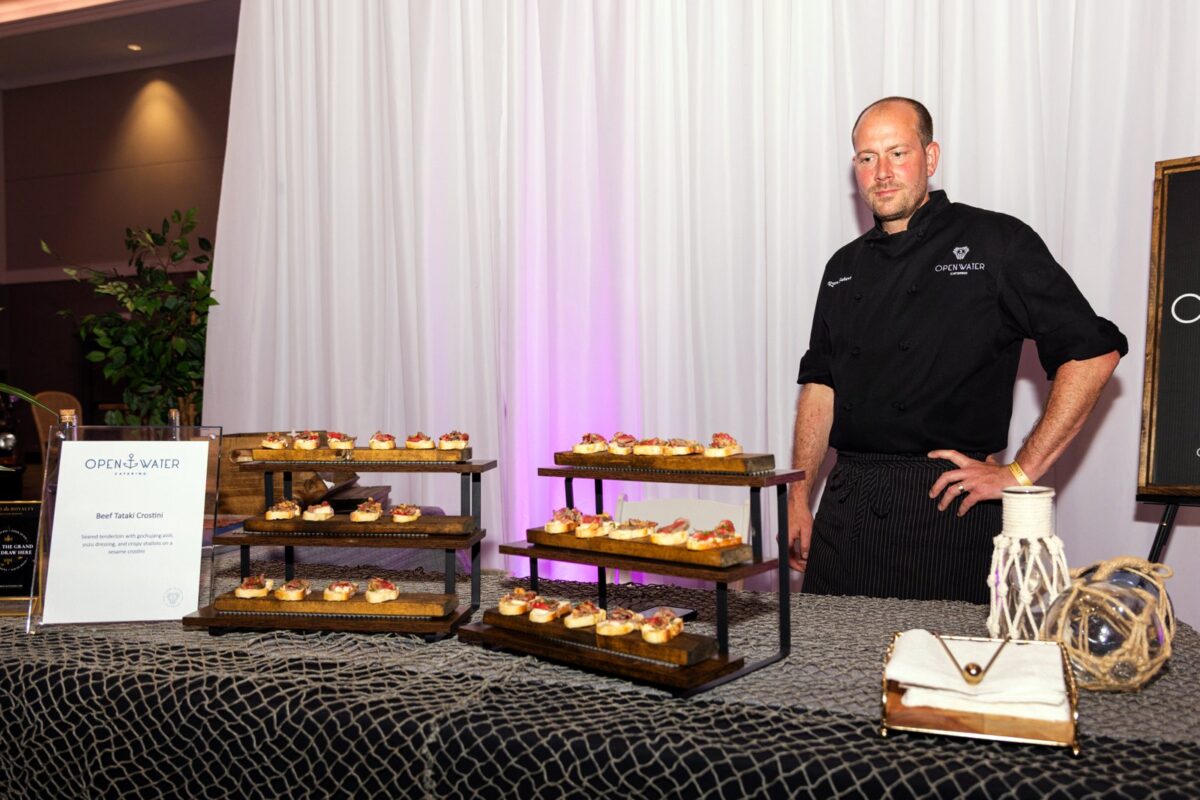
Precision is the word that comes to mind watching Ryan Siebert describe how a lobster slider gets built. The matcha bun, the tempura nori standing in for bacon, the roasted corn aioli that doesn’t compete with the lobster: every component earns its place. Siebert, a Red Seal Executive Chef and owner of Victoria’s Open Water Catering, trained in classical French technique at Le Cordon Bleu in Sydney before bringing that foundation to the Pacific Northwest, where every two-bite canapé gets the same architectural thinking as a five-course meal.
The Foundation
Siebert’s culinary education started at Le Cordon Bleu in Sydney, Australia, a program rooted in classical French cuisine. The fundamentals came first: the origin of the food, the original recipes, the mechanics of how ingredients behave under heat and pressure and time. That base of understanding became the platform for everything that followed.
“Once you have that foundation of how food can be manipulated,” Siebert says, “you start working into your own fusions, your own networks of flavours.”
For Siebert, that meant bridging classical technique with the ingredients of the Pacific coast. He grew up in Abbotsford, in the Fraser Valley, surrounded by the agricultural backbone of British Columbia. The transition from French precision to Pacific Northwest fusion was less a deliberate pivot than a natural consequence of training in one tradition and cooking in another.
From the Garden to the Supply Chain
Open Water Catering started with a hands-on garden-to-table philosophy that went well beyond sourcing. Siebert was growing over 35 varieties of organic, non-GMO seeds for his menus: Striped Roma Tomatoes, Blue Peruvian Potatoes, Lemon Cucumbers. The produce went straight from the soil to the plate.
That chapter has evolved. As the business grew, the garden could no longer sustain the volume. Open Water now sources as much product as possible through the South Island Food Hub, a regional distribution network that aggregates produce from smaller and larger local farms into a centralized system. A farmer who grows beans or greens for the weekend market can also move product at scale through the hub, keeping the supply chain rooted on the island even as Open Water’s event calendar expanded.
Siebert still grows herbs and strawberries at home for his family. The instinct hasn’t changed. The scale has.
“We try to stick within our reach of what’s locally grown and in season,” he says. Vancouver Island’s mild climate helps. Root vegetables, squashes, beets, garlic, and carrots remain available through the winter months, and many freeze well enough to carry into the leaner stretches. When a client’s preferences push the menu away from what’s seasonal, Siebert adapts, but the default is always local and always in season.
Building the Bite
Ask Siebert how a dish comes together and the answer sounds less like a chef and more like someone solving a design problem. Take the lobster slider that appeared at Culinaire Victoria 2025: a matcha bun, tempura nori, roasted corn aioli, and lobster.
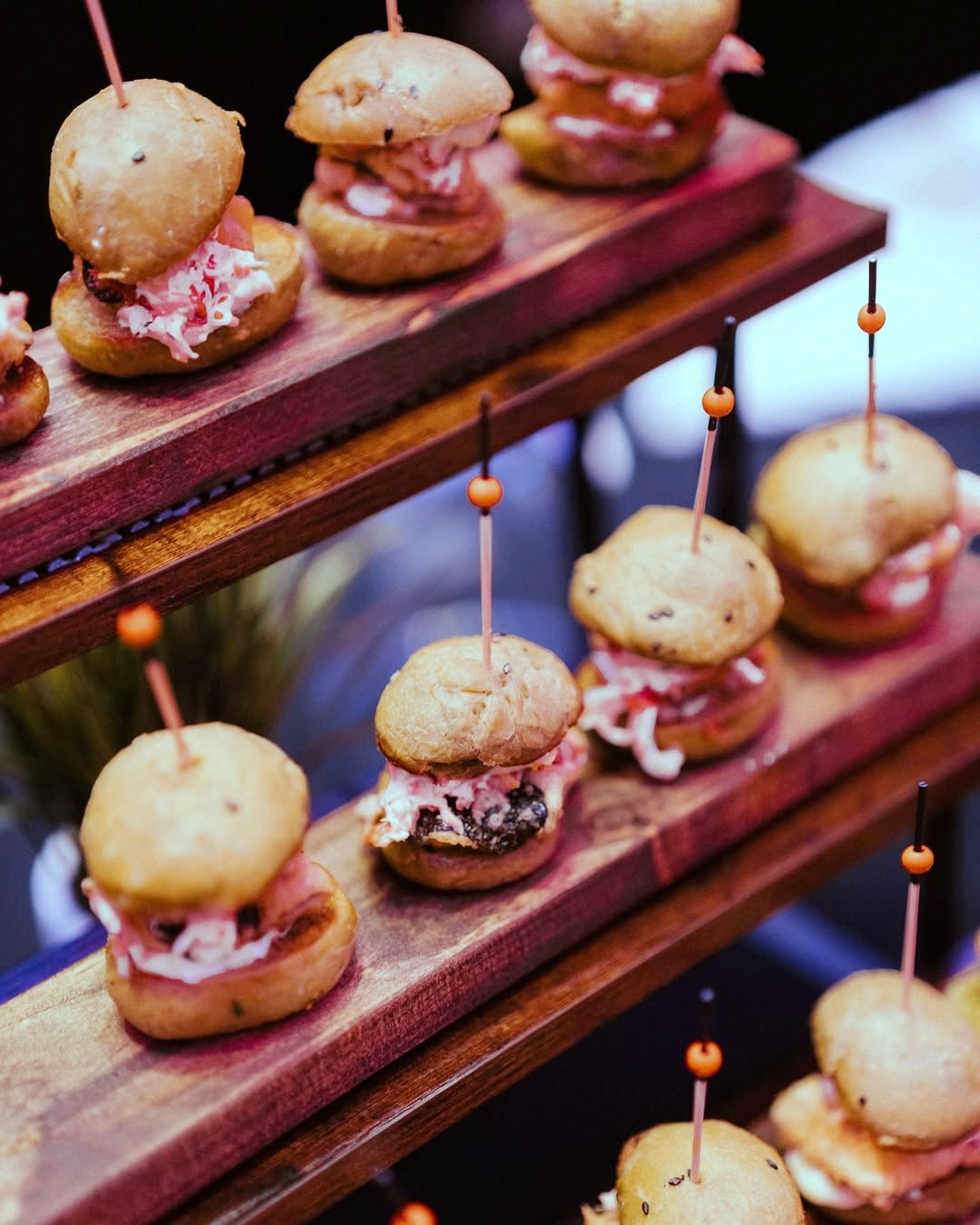
The matcha bun provides the visual anchor, a vivid green that catches the eye before the first bite. The lobster delivers bold, unmistakable flavour. The roasted corn aioli introduces a twist that complements without competing. And the tempura nori adds crunch, filling the textural role that bacon might play in a more conventional build. Colour, flavour, texture, visual impact. Each element is there to solve a specific problem in the composition.
Flavour, texture, and visual all come into play when you’re building a dish. And then there’s efficiency: can it be created at volume? Can it be produced quickly? That comes into play as well.
Ryan Siebert, Executive Chef & Owner, Open Water Catering
That last consideration, efficiency, is the line that separates event catering from restaurant cooking. A dish that takes four minutes to plate is a liability at a 900-person showcase. Siebert’s team thinks about reproducibility from the concept stage, not as an afterthought. The creative ambition and the logistical reality develop together.
The client conversation shapes everything else. Every event starts with getting to know the client, the venue, the guest list, and the occasion on a personal level. Some clients want a set menu. Others want full custom builds. Siebert’s team works within whatever the brief demands, but the underlying method stays consistent: understand the people, understand the space, then design the food to fit both.
The Setting as Ingredient
One of the more distinctive aspects of Open Water’s approach is the relationship between venue and menu. Siebert doesn’t just cater at a location. He reads it.
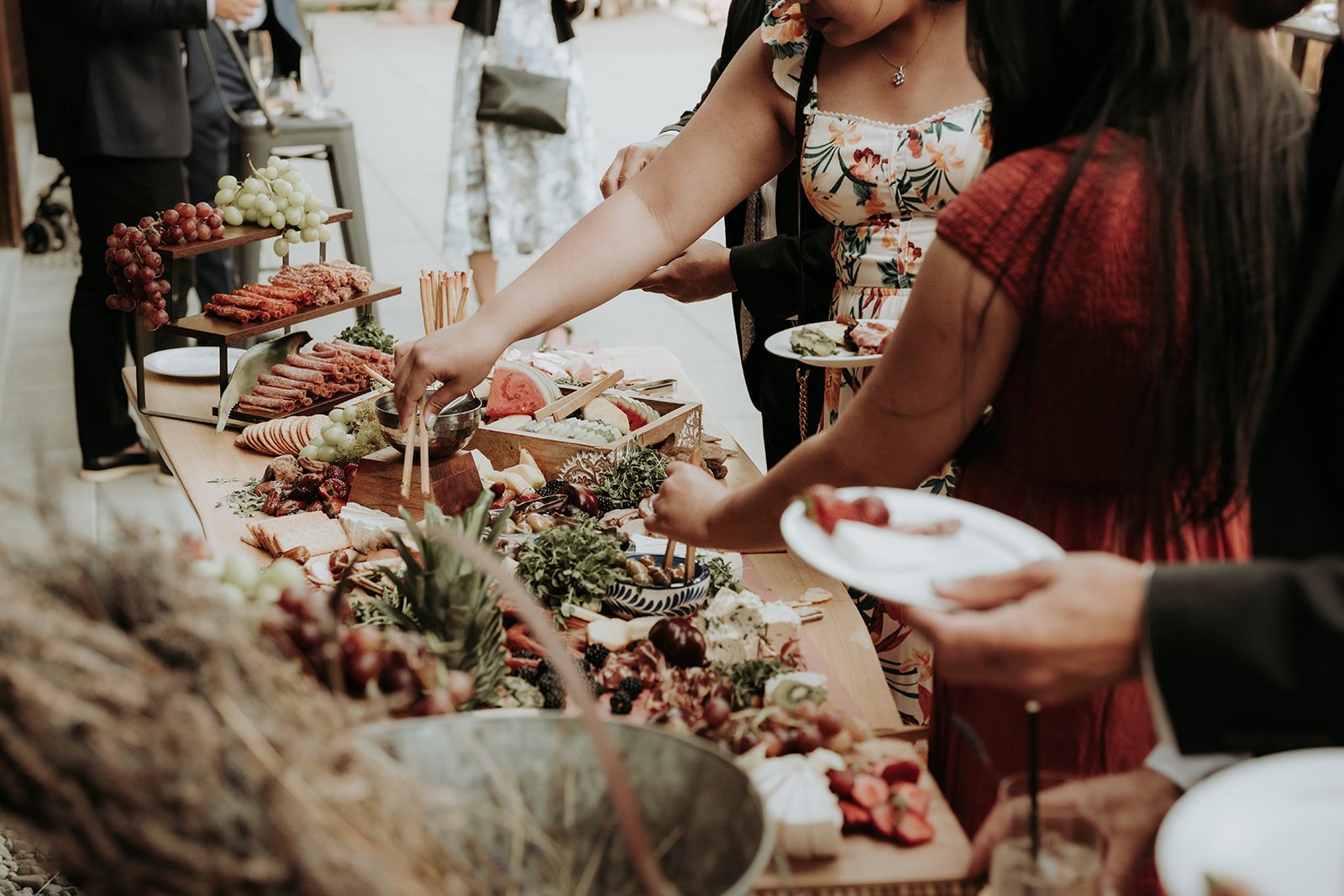
At Bilston Creek Farm, where lavender fields and beehives are part of the landscape, Open Water has folded the farm’s own honey into salad dressings and chicken glazes, and worked lavender into bar packages. The venue’s raw materials become ingredients in the meal. At Sea Lion Estates, where the setup runs along the ocean, the plating shifts to West Coast-style platters that match the coastline. Even the boards and serving surfaces are selected to fit the surroundings.
“When we’re looking at doing family styles or certain types of food service,” Siebert says, “we’re really sticking with that West Coast theme and trying to use platters or boards that fit the surroundings as well.”
Film set catering was part of Open Water’s early years on the South Island, a different discipline entirely: feeding professionals on a production schedule. Siebert has since moved on from that work to focus on weddings, events, and a growing corporate portfolio, but the operational discipline of feeding a crew on a deadline left its mark on how the company manages volume and timing.
What’s Next
Open Water is in the middle of a full menu overhaul. New canapés, new buffet formats, new plated and family-style options are all being developed and tested in the kitchen. The wedding season ahead is fully booked, and Siebert is simultaneously building out a dedicated corporate catering menu, a market he sees as the company’s next growth frontier.
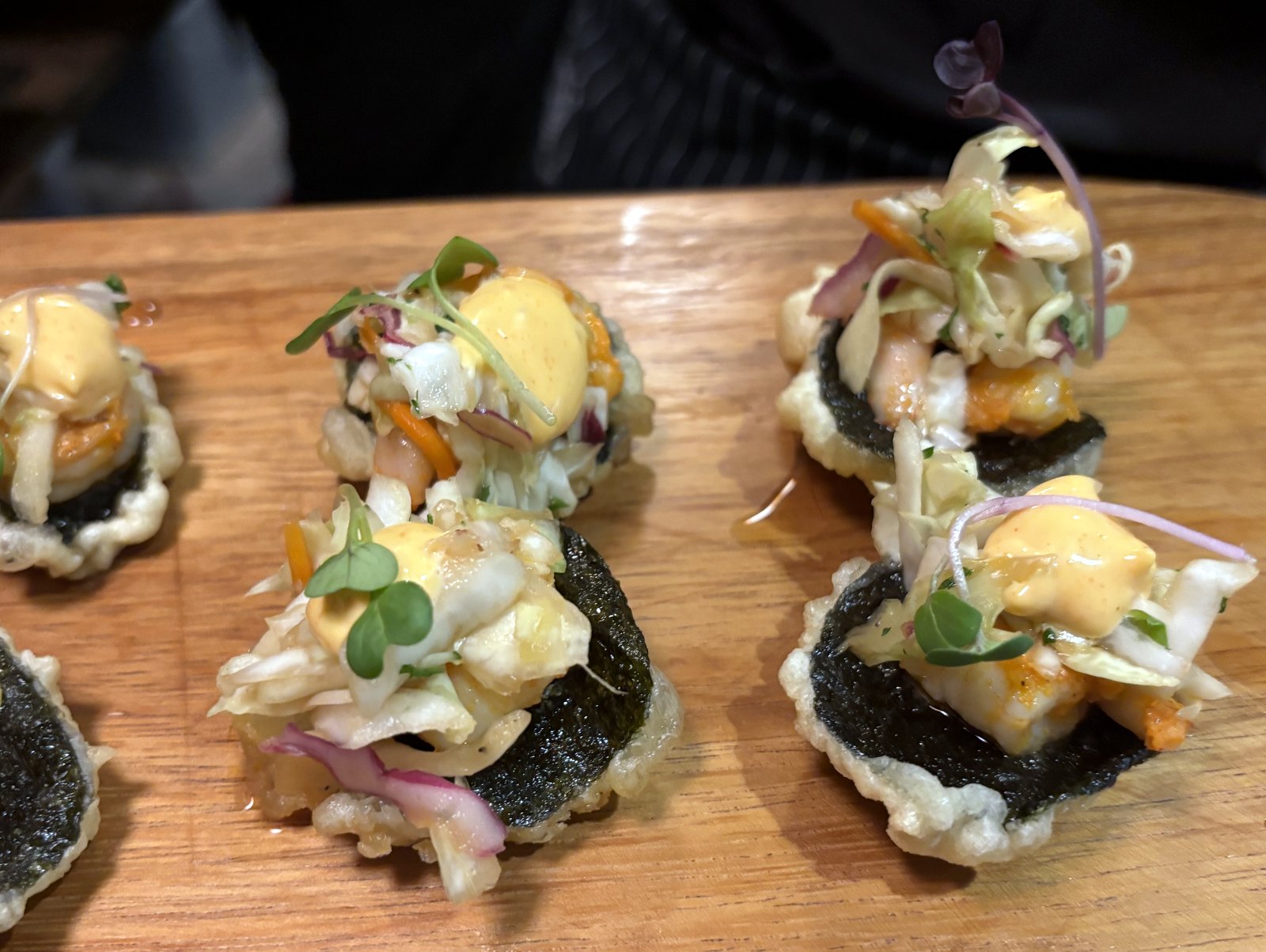
Among the new additions: a tempura prawn taco built on a single nori sheet, dipped in tempura batter and deep-fried so it naturally curls into a vessel, filled with gochujang aioli, ponzu-dressed shredded cabbage, and green onions. And a honey-glazed fried chicken slider that replaces the bun entirely with a house-made mini glazed donut, split and filled with the chicken, candy jalapeños, and bacon dust.
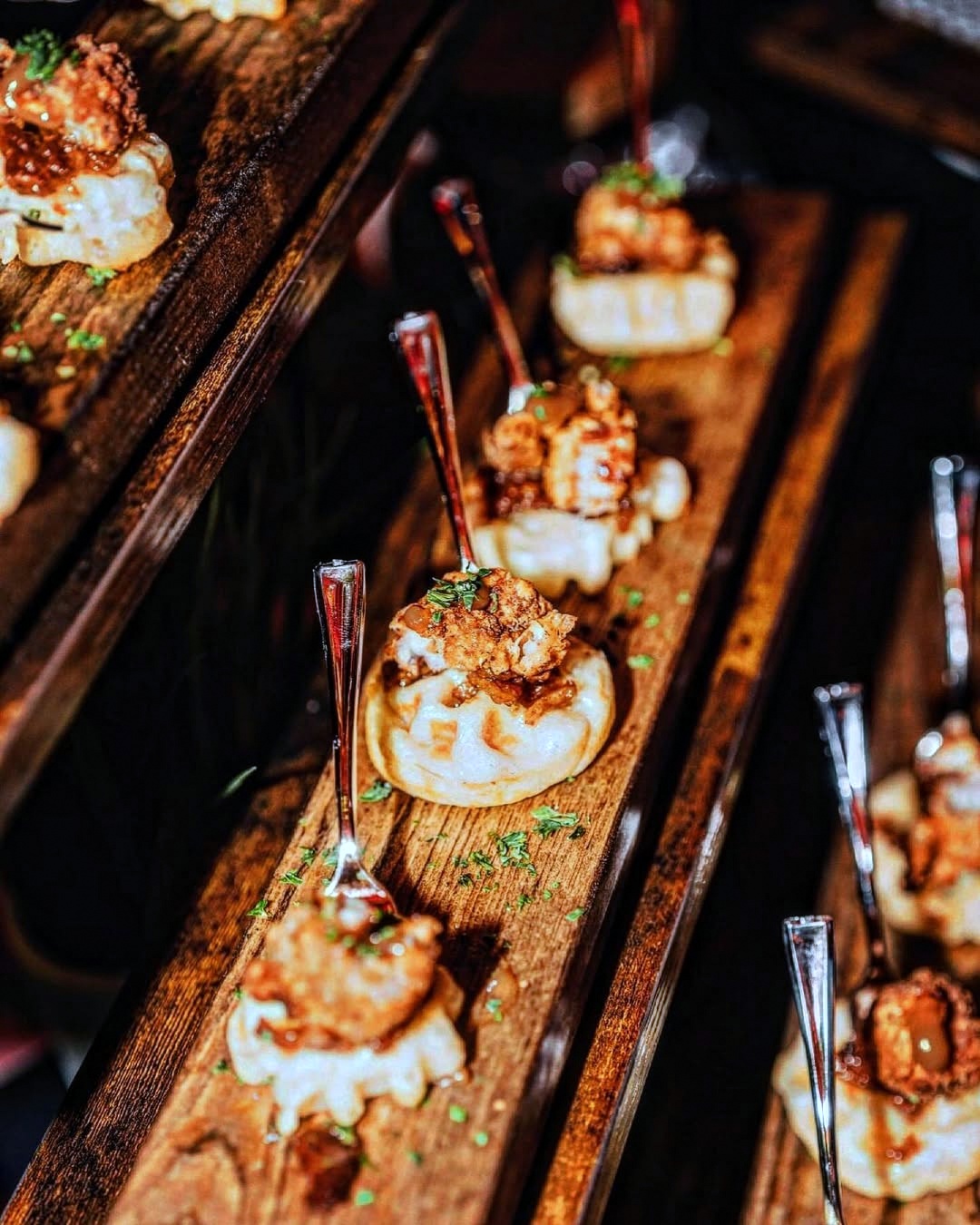
The donut slider came from a straightforward question the team asked themselves: how do you deliver a slider when the vessel itself is the concept? The answer was to make the container part of the flavour.
You can’t claim to be the first person to do anything. It’s finding a way to put your own personal touches on a dish, your own delivery, and making it special to the company.
Ryan Siebert, Executive Chef & Owner, Open Water Catering
That honesty runs through everything Siebert builds. He isn’t chasing firsts. He’s refining a method: classical technique, coastal ingredients, settings that inform the plate, and an eye for the kind of detail that makes a two-bite canapé feel considered from every angle.
Open Water Catering
Website: openwatercatering.com
Instagram: @open_water_catering
Location: Victoria, BC
Explore more stories from our partners, or discover how you can join this curated community.